
Key Takeaways
- Cylindrical grinding is essential for achieving high precision in manufacturing.
- Advancements in technology have enhanced the capabilities of cylindrical grinders.
- Various industries rely on cylindrical grinding for producing critical components.
Table of Contents
- Introduction
- The Essence of Cylindrical Grinding
- Technological Advancements in Cylindrical Grinding
- Applications Across Industries
- Achieving Microscopic Precision
- The Future of Cylindrical Grinding
- Conclusion
Introduction
Precision defines the modern manufacturing era, and cylindrical grinding is at the heart of this pursuit for accuracy. This versatile process is trusted by manufacturers for its reliability in achieving extremely tight tolerances, meeting the rigorous demands of industries ranging from aerospace to medical device production. Whether a facility uses an automated or manual cylindrical grinder, the importance of this technology remains constant for producing high-quality, reliable components. Cylindrical grinding not only ensures the geometric integrity of parts but also delivers the kind of surface finish required for optimal performance. As industries progress and product designs evolve, the foundational role of this machining process remains unchallenged. Manufacturers adapting to increasing precision demands continue to push the boundaries of what is achievable with cylindrical grinding.
The Essence of Cylindrical Grinding
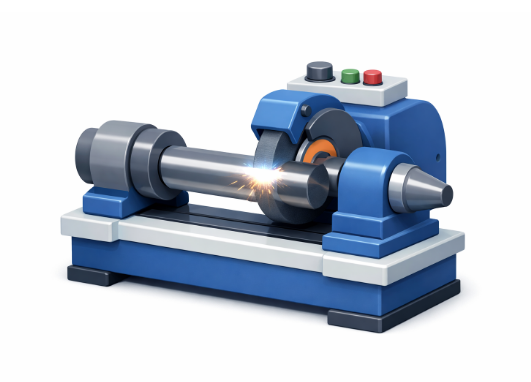
At its core, cylindrical grinding revolves around the accurate removal of material from an object’s external surface. The basic principle involves rotating the workpiece about its axis while a grinding wheel moves into contact, developing a smooth, perfectly round external shape. This precise process is vital in creating items such as crankshafts, axles, rods, and bearings, parts where even a minor deviation can compromise functioning and safety. The setup of a cylindrical grinder ensures that the grinding wheel and the workpiece remain aligned, allowing consistent surface quality and exact dimensional tolerances. It is this unmatched reliability that makes cylindrical grinding indispensable to industries that rely on safety-critical, high-precision applications.
Technological Advancements in Cylindrical Grinding
Technological evolution has dramatically expanded the capabilities of cylindrical grinding. Today’s grinders harness the power of computer numerical control (CNC), empowering operators to automate highly complex cycles and reliably achieve repeatable results. With CNC systems, sophisticated geometries can be produced with consistency, enhancing productivity while reducing human error. Innovations like digital twin technology have also transformed the landscape, enabling virtual representations of machines to monitor real-time performance. This allows for immediate adjustments during production, reducing scrap rates and ensuring parts stay within required tolerances. Furthermore, advances in grinding wheel materials and adaptive process-monitoring tools have enabled faster cycles and improved surface finishes.
Applications Across Industries
The versatility of cylindrical grinding extends its reach into some of the world’s most demanding sectors. In aerospace, it is used to craft turbine shafts, landing gear, and control system parts capable of withstanding high stresses and tight fitment requirements. Automotive manufacturers use this process to produce camshafts and gear shafts, ensuring the smooth operation of engines and transmissions.
In medicine, cylindrical grinding supports the manufacture of surgical instruments, bone screws, and prosthetic components requiring absolute accuracy. The process is increasingly essential for the renewable energy sector as well, which demands precise tooling for wind turbines and high-performance electric vehicles.
Achieving Microscopic Precision
One of the defining trends in modern manufacturing is the requirement for microscopic levels of precision. Modern cylindrical grinding machines routinely achieve tolerances of mere microns, a feat driven by sophisticated motion controls, high-accuracy feedback systems, and advanced machine design. Surface finishes are also refined to near-mirror levels, reducing friction, preventing premature wear, and supporting applications such as high-speed spindles and EV motor shafts where performance cannot be compromised. Adopting these precision standards is critical, especially as miniaturization becomes increasingly prevalent across fields such as electronics, optics, and medical devices. Consistently achieving such minute tolerances means that manufacturers can deliver advanced products trusted for quality and durability.
The Future of Cylindrical Grinding
The future of cylindrical grinding is marked by smart automation and an increasing focus on sustainability. Artificial intelligence and machine learning are being integrated to optimize process parameters further, predict machine maintenance needs, and reduce waste. Cutting-edge sensors and analytics platforms continue to push the limits of both efficiency and quality, making the process even more adaptable to contemporary manufacturing expectations. Sustainable grinding practices are also on the rise. Machine manufacturers are exploring the use of energy-efficient drives, eco-friendly coolants, and improved filtering systems. As manufacturing’s environmental footprint becomes an industry-wide concern, cylindrical grinders will evolve to incorporate greener processes while maintaining the exacting precision customers require.
Conclusion
Cylindrical grinding remains a fundamental technology empowering manufacturers to meet the needs of increasingly complex, high-precision markets. Continuous innovation, paired with a commitment to sustainability and reliability, ensures this process will continue to play a pivotal role in shaping the future of advanced manufacturing. Whether used to create robust aerospace components or lifesaving medical devices, cylindrical grinding is set to remain at the core of precision production for years to come.