
Properly storing mushroom cultures is crucial to maintaining mycelium health and viability for future use. Whether you are an amateur cultivator or managing a laboratory, understanding the correct storage methods can greatly extend the lifespan and usability of your genetic material. This guide explains the most effective methods for storing a range of culture types, from spore prints to liquid cultures.
When it comes to mushroom cultivation, protecting your investment in strains and genetics is important. With the right procedures, you can avoid contamination, minimize loss, and ensure your mushroom cultures are ready for use when you need them. The key is maintaining the right environmental conditions, temperature, sterility, and labeling, all of which play a role in long-term viability.
There are several types of mushroom cultures, each with its own best practices for storage. These range from drying and packaging spore prints to preserving mycelium on agar or in grain to keeping living cultures dormant but viable for months or even years. This article breaks down the important steps for each main culture type so you can feel confident about the future of your collection. Consistent, sterile handling and routine monitoring are essential to prevent compromised cultures and lost material. By caring for your cultures using these guidelines, you’ll stay prepared for every new growth.
Spore Prints
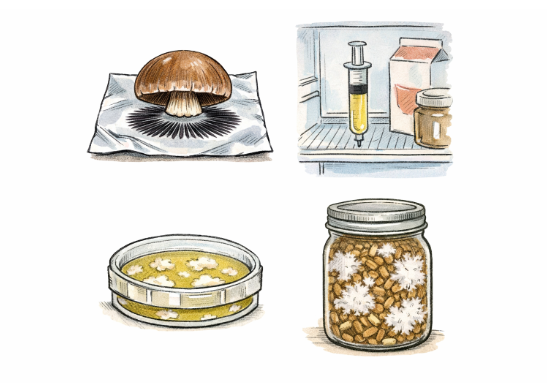
Spore prints are an easy and time-tested way to preserve mushroom genetics. They are not living cultures but offer an excellent backup and starting point for new cultivations. After collecting a mushroom cap’s spore print on sterile aluminum foil, allow it to dry in a low-moisture, contamination-free environment. The drying step is essential as moisture encourages unwanted microbial growth. Once completely dry, fold the foil to protect the print and place it inside a sterile, sealable plastic bag with a desiccant packet. Store this package in a cool, dark, and dry place. Under these conditions, spore prints can remain viable for several years, making them ideal for long-term genetic preservation in your collection or trading community.
Liquid Cultures
Liquid cultures contain mycelium suspended in a nutrient-rich solution, ready to inoculate other substrates or expand into new growth. For proper long-term storage, keep sealed liquid culture syringes refrigerated at about 4 degrees Celsius (39 degrees Fahrenheit). This cold environment slows mycelial metabolism without freezing, extending the cultures’ usefulness for up to six months. Always inspect your liquid cultures regularly. If the solution becomes cloudy, changes color, or develops an off odor, this is a sign of contamination, and it is best to discard the affected syringe. Ensuring sterility when handling and withdrawing samples will help preserve all your cultures for repeated use.
Agar Plates
Agar plates are often used to culture and isolate mycelium strains under controlled conditions. To safeguard your progress, always seal agar plates with parafilm, plastic wrap, or a similar sealant to prevent contamination and moisture loss. Storing them in the refrigerator is standard practice, letting you maintain viable cultures for many months. For those needing longer storage, agar slants and test tubes filled with agar inoculated with mycelium can be refrigerated for up to a year. Regularly inspect stored plates and slants for contamination or drying, removing any problematic samples promptly to protect your collection.
Grain Spawn
Grain spawn is colonized grain and is a primary method for inoculating large-scale or bulk substrates quickly. Once fully colonized, store the bags or jars in a refrigerator to slow down mycelium growth. It is best to use refrigerated grain spawn within three to four weeks for peak performance. Prolonged storage can reduce vigor and increase the risk of contamination or weakened yields. Before using grain spawn, let it come back to room temperature to revitalize the mycelium. Avoid fluctuating temperatures or direct contact with moisture, as these factors speed up the deterioration of stored spawn.
Best Practices for Long-Term Storage
- Labeling: Clearly mark all cultures with the species, strain, and date of storage. This information is crucial for tracking viability and future propagation.
- Sterility: Use sterile procedures during all phases, preparation, storage, transfer, and monitoring. Contamination is the number one cause of culture loss.
- Regular Monitoring: Set a schedule to inspect stored cultures for any indication of contamination, drying, or loss of vigor. Discard any compromised material to protect your remaining stock.
Conclusion
Mastering the storage and maintenance of mushroom cultures leads to more reliable cultivation and greater genetic preservation. By applying proper techniques for spore prints, liquid cultures, agar plates, and grain spawn, and by adhering to best practices in labeling, sterility, and regular checks, cultivators can enjoy continued success and minimal setbacks. An investment in precise storage today means more robust harvests and greater strain diversity tomorrow.