
Casters play a crucial role across various industries, allowing for effortless movement of equipment, furniture, and heavy machinery. Whether you are outfitting a new office, optimizing a manufacturing facility, or simply upgrading your workspace, understanding the different types and materials of casters can help you make an informed choice. The success and efficiency of your operation often depend on selecting casters that suit your requirements, from phenolic wheel varieties to more specialized options.
Though their function may seem basic, not all casters are created equal. The material, design, and mechanical features can significantly impact the ease of movement and safety in any given environment. For anyone tasked with upgrading mobile components or specifying them for new builds, knowing the available options helps ensure reliable, long-lasting results.
Carefully considering the specific environment and load requirements will limit unnecessary wear, reduce maintenance costs, and improve workplace safety. Casters engineered from suitable materials also help mitigate damage to flooring and other surfaces over time. With so many products available, choosing wisely is essential to get the best value and performance.
Types of Casters
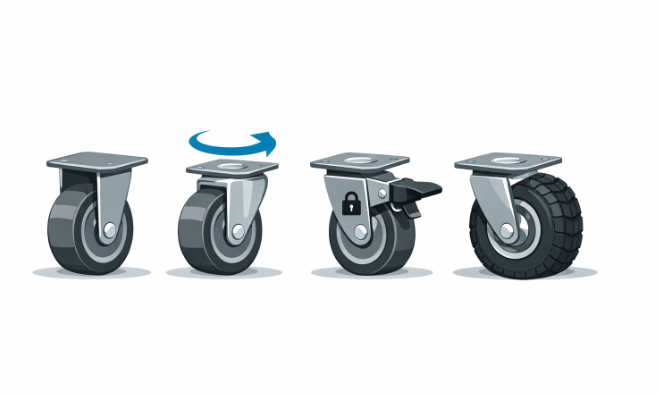
There are four primary types of casters, each tailored for a specific use and movement style:
- Rigid Casters: Rigid casters roll in a straight line and do not swivel, making them suitable for equipment that only needs to move forward and backward. They are common in applications where space for turning is limited.
- Swivel Casters: Swivel casters can rotate 360 degrees thanks to their specialized bearing design, offering unmatched maneuverability for carts and furniture that must turn in tight spaces.
- Brake Casters: With an integrated brake mechanism, these casters can be locked to keep equipment stationary and secure, improving both safety and stability during use or transport.
- Pneumatic Casters: Designed with air-filled wheels, pneumatic casters offer shock absorption and high performance over rough or uneven surfaces. These are ideal for outdoor use or in environments with frequent bumps or debris.
Materials Used in Caster Wheels
The choice of material for a caster wheel not only dictates its performance but also its compatibility with different surfaces and environments:
- Rubber: Rubber caster wheels are known for their quiet operation and floor protection qualities, making them a popular choice for indoor settings, such as homes and offices.
- Polyurethane: Polyurethane wheels stand out for their excellent durability and chemical resistance, making them suitable for a range of applications, from medical equipment to industrial carts, where longevity and strength are important.
- Nylon: Capable of bearing heavy loads and withstanding wear, nylon casters are well-suited for harsh conditions and high-capacity usage, such as in warehouses and factories.
- Steel: Offering unmatched durability, steel wheels are preferred for moving very heavy machinery, although they should be used with consideration due to their potential to damage certain floor types and create noise.
Factors to Consider When Choosing Casters
Several factors must be evaluated to choose the right caster for your application:
- Load Capacity: Ensure each caster can safely support the equipment’s weight plus its maximum load. Overlooking this may lead to safety hazards and premature wear.
- Floor Type: The type of flooring, hardwood, carpet, concrete, or tile, should dictate the wheel material to avoid scuffs, dents, or other damage.
- Environmental Conditions: Consider how temperature extremes, moisture, or chemical exposure will affect the caster’s integrity over time. Some casters are specially treated for harsher conditions, while others may degrade quickly in adverse environments.
- Maneuverability Requirements: Assess the turning radius needed for your application. Spaces that demand sharp turns or changes in direction will benefit from swivel casters, while straight paths can use rigid casters to maintain control.
Common Applications of Casters
Casters are found in nearly every sector, supporting mobility and efficiency in different contexts:
- Office Furniture: Office chairs and desks typically rely on casters for seamless repositioning and adaptability within the workspace.
- Industrial Equipment: Manufacturing and logistics facilities outfit carts, workstations, and machinery with heavy-duty casters for reliable, safe mobility.
- Medical Devices: Hospital beds, IV stands, and imaging equipment often incorporate specialty casters for smooth, rapid movement in critical situations.
- Retail Displays: Modular shelves, clothing racks, and point-of-sale displays often use casters to allow staff to quickly adjust floor layouts or displays as needed.
Maintenance Tips for Casters
Proper maintenance not only extends the life of your casters but also prevents workplace accidents and equipment damage:
- Regular Inspection: Conduct scheduled checks for cracks, flat spots, or uneven wear, which indicate a need for replacement or adjustment.
- Lubrication: Lubricate wheel axles and swivel bearings periodically to ensure smooth, quiet operation and to prevent unnecessary strain on moving parts.
- Cleaning: Remove debris, grit, and tangled fibers from caster wheels and bearings regularly. Clean casters not only operate more efficiently but also prevent potential floor damage.
- Tightening: Frequently check all mounting hardware. Tightening loose bolts and fasteners will keep casters securely attached, reducing the risk of accidents or equipment failure.
Final Thoughts
Choosing the right caster is not simply a matter of picking a size or shape. It requires attention to the type of movement required, the durability levels required by the environment, and a basic understanding of wheel materials. By considering load capacity, floor type, and maneuverability, businesses and individuals alike can significantly improve both the safety and functionality of their equipment.